What is a realistic crypto plan for the next cycle in 2026?
Want articles like this for your own video to promote it on YouTube and Google? Order them through the Telegram bot @sat_sit_bot. The bot writes and publishes the articles itself (with your YouTube video embedded) on popular topical websites (no ads). Try it free: 50 articles on us.
· based on the channel Brian Jung
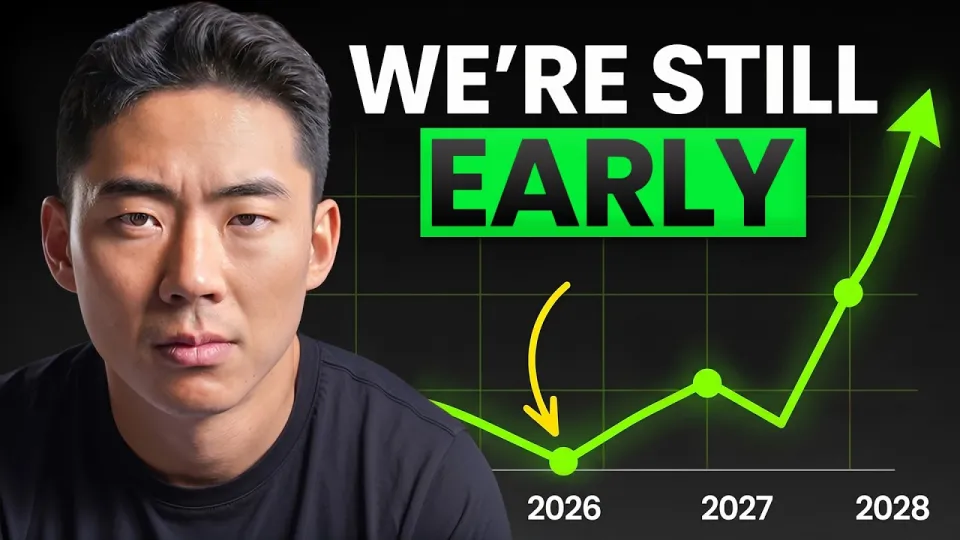
A realistic crypto plan for the next cycle is not a bet on one coin but a structure: a core position in Bitcoin and Ethereum, a capped sleeve for high-conviction narratives, and rules written down before the market tests them. The case for staying constructive rests on institutional access through ETFs, corporate treasury buying and clearer stablecoin rules, not on retail hype. Brian Jung lays out his own version of that framework in his video breakdown, and the waitlist for his Kaizen Pro research product is open at Kaizen Pro on Whop.
Why the bullish case for crypto rests on flows, not hype
The bullish argument in 2026 is structural: the marginal buyer has changed. Spot Bitcoin ETFs gave registered investment advisors, pension consultants and brokerage clients a compliant way to hold the asset, and that channel did not exist in previous cycles. Ethereum followed with spot ETF access, which pulled the second-largest asset into the same distribution machinery.
Corporate treasuries added a second demand layer. Public companies that hold Bitcoin on the balance sheet convert equity capital into spot buying, and their announcements have repeatedly front-run retail attention. Stablecoin legislation in major jurisdictions — the US GENIUS Act framework and Europe's MiCA regime — moved dollar-denominated tokens from a gray area into a licensed one, which is why payment companies and banks now treat them as infrastructure rather than a curiosity.
The practical implication: flows from these channels are slower and stickier than retail mania. They can also reverse. ETF outflows in a risk-off week are a real signal, not noise, and anyone building a crypto plan should watch net creations and treasury purchase announcements as leading indicators rather than price alone.
The narratives that could drive the next leg
Four themes keep coming up when traders discuss where the next leg of growth comes from.
- Real-world asset tokenization. BlackRock's BUIDL fund, Ondo Finance and similar products put Treasuries and money-market yield on-chain. The pitch is boring and that is the point: yield-bearing, audited, regulated instruments attract capital that would never touch a memecoin.
- Stablecoin payments. With licensing clearer, stablecoins are being wired into remittances, cross-border B2B settlement and card rails. Volume growth here is measurable and does not depend on token prices.
- AI-adjacent infrastructure. Projects selling compute, data and agent payments — Render, Fetch-style agent networks, decentralized storage — trade as a leveraged bet on the AI capex boom. Treat the correlation honestly: if AI equities correct, these tokens correct harder.
- High-throughput layer-1s. SUI and Solana remain the two ecosystems most often cited for consumer applications, gaming and payments because of low fees and fast finality. Ecosystem tokens tend to move together, so owning three of them is often one position, not three.
How to build a plan that survives a drawdown
A plan is only useful if it is written before the emotions arrive. A workable structure looks like this:
- Core (50–70%): Bitcoin and Ethereum, held spot, no leverage. This is the part that captures institutional inflows.
- Narrative sleeve (20–35%): three to five positions mapped to the themes above, each capped at a fixed percentage of the portfolio. If one doubles, trim back to the cap.
- Dry powder (10–20%): stablecoins held for drawdowns of 20% or more in the core assets, not for chasing green candles.
- Rules: a written invalidation level for every position, a maximum portfolio drawdown that triggers a review, and a ban on adding leverage after a good month.
The reason sizing dominates selection is arithmetic. A 10x on 2% of a portfolio adds 20%; a 60% drawdown on 50% of a portfolio removes 30%. Most people who "lost everything" lost it to leverage and late entries, not to picking the wrong layer-1.
Typical doubts from traders, answered honestly
"Isn't this just the same bullish call as last time?" Partly, and that is a fair criticism. Every cycle produces confident forecasts, and some of them fail. The difference this time is that the buyer base includes regulated vehicles and corporate balance sheets, which lengthens the runway but does not remove drawdowns of 30–50% along the way.
"Does regulatory clarity actually help, or does it just let banks take over?" Both can be true. Licensing brings custody, payments and retirement access, which expands the market. It also centralizes intermediation, so the cypherpunk version of crypto and the ETF version increasingly diverge. Holders should decide which one they are actually betting on.
"What if the four-year cycle is dead?" A longer, flatter cycle is plausible. If institutional flows arrive steadily rather than in a retail frenzy, the violent blow-off top may be replaced by a grinding advance with sharper, shorter corrections. Plans built around a single date for "the top" are fragile; plans built around rebalancing bands are not.
"Should I put half my portfolio into altcoins?" Only if the other half is genuinely in core assets and the altcoin half is money you can watch fall 70% without changing your life. Altcoin beta cuts both ways.
Where the risks actually sit
Leverage is the first risk and the least discussed. Liquidation cascades do not care about your thesis. The second is concentration in a single ecosystem: if SUI, Solana and three of their ecosystem tokens are 40% of the book, that is one trade. The third is timing: buying after a 300% move and calling it a long-term position is how cycles transfer wealth from late buyers to early ones. The fourth is custody — exchange failures have burned more people than bad picks, so self-custody for the core is not optional for serious size.
All links from the video
- Kaizen Pro waitlist: https://whop.com/kaizen/products/kaizen-pro/
- Free crypto market report newsletter: https://newsletter.kaizen.gg/subscribe
- X (Twitter): https://twitter.com/thebrianjung
- Instagram: https://www.instagram.com/creditbrian
- Risks and disclaimers document: https://docs.google.com/document/d/1WIgz8SB1mMzke0uvLt_6zXmSbqLL4gL5VgpDnVEk5m8/edit?usp=sharing
The bottom line
A crypto plan for the next cycle works best as a portfolio structure rather than a prediction: core Bitcoin and Ethereum exposure, a capped sleeve for tokenization, stablecoin payments, AI infrastructure and high-throughput layer-1s, plus cash reserved for real drawdowns. Brian Jung's video breakdown is a useful starting point because it frames the bullish case around flows and narratives rather than price targets, and it is honest that drawdowns remain part of the deal. Anyone who wants the fuller research process can join the Kaizen Pro waitlist. Write the rules first, size positions so a bad month is survivable, and treat every forecast, including this one, as a hypothesis to be tested.
Key takeaways
- The next cycle is framed around institutional inflows, not retail speculation: ETF access and corporate treasury buying change who sets the marginal price.
- Narratives to watch: real-world asset tokenization, stablecoin payments, AI-adjacent infrastructure, and layer-1 ecosystems such as SUI and Solana.
- A workable plan splits capital into a core Bitcoin/Ethereum allocation and a smaller, deliberately capped altcoin sleeve rather than going all-in.
- Regulatory clarity, especially around stablecoins, is treated as a tailwind, while the risk of a longer, flatter cycle replaces the old four-year rhythm.
- Position sizing and pre-set exit rules matter more than picking the single best coin, because most losses come from leverage and late entries.
Questions & answers
Is the four-year crypto cycle still relevant in 2026?
It is a weaker guide than it used to be. Institutional inflows through ETFs and corporate treasuries arrive more steadily than retail mania, which can stretch the cycle and flatten the blow-off top. Many traders now watch flows and liquidity conditions instead of counting months from the last halving.
How much of a portfolio should go into altcoins?
A common structure is 50–70% in Bitcoin and Ethereum, 20–35% in a capped narrative sleeve and 10–20% in stablecoins for drawdowns. The sleeve should be money you can watch fall 70% without changing your strategy, because altcoin beta cuts both ways.
Which narratives are worth watching beyond Bitcoin?
Tokenized real-world assets, stablecoin payment rails, AI-adjacent compute and data networks, and high-throughput layer-1 ecosystems such as SUI and Solana. Note that ecosystem tokens often move together, so holding several of them is closer to one position than to diversification.
Does regulatory clarity help or hurt crypto?
It mostly expands the market by enabling custody, payments and retirement access, which is why stablecoin licensing is treated as a tailwind. The trade-off is more intermediation by banks and asset managers, so the ETF version of crypto and the self-custody version increasingly diverge.
Source: my plan to make millions in crypto 2027 · Markdown version